Mastering Staging Ingredients for Industrial Baking
A Comprehensive Guide to Efficient Ingredient Management in Large-Scale Baking Operations
In the realm of industrial baking, the careful staging of ingredients is pivotal to ensuring consistency, quality, and efficiency. This article explores the essential strategies for ingredient management, examining the critical role it plays in large-scale baking operations.
Understanding the Basics of Ingredient Staging
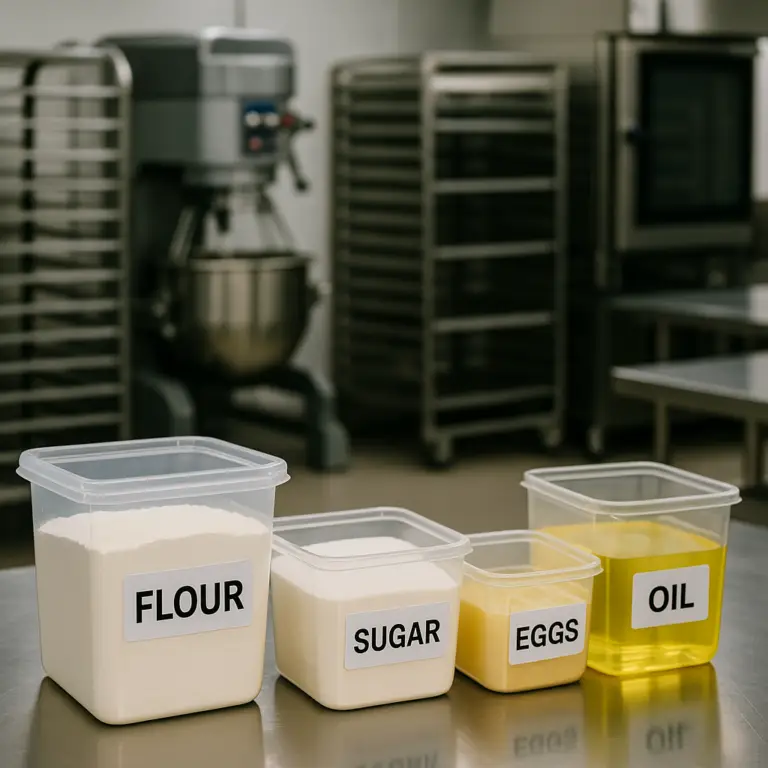
Ingredient staging in industrial baking is a crucial process that enhances operational efficiency and ensures product consistency. Central to this practice is the concept of preparing and organizing ingredients before production begins. By grouping ingredients, such as flour, sugar, fats, and leavening agents, in a designated staging area, bakeries can minimize downtime and optimize workflow during mixing and baking processes.
Effective staging not only streamlines operations but also plays a significant role in waste reduction. For instance, using bulk ingredients allows for easier adjustments to quantities as per demand, while pre-portioned ingredients lend themselves to quicker preparation and accuracy in recipes. A well-organized staging system ensures that all ingredients are at hand, reducing the likelihood of errors and material waste, thereby bolstering profitability in a fast-paced industrial environment.
Effective Techniques for Staging Ingredients
Effective staging is an integral part of industrial baking, utilizing techniques such as batching and mise en place to streamline operations. Batching involves calculating precise ingredient amounts required for each production run, ensuring consistency and minimizing waste. Meanwhile, mise en place emphasizes the preparation of all necessary components before initiating the baking process, fostering an organized workflow.
Automation further enhances ingredient staging through tools like ingredient dispensing systems, which provide accurate measurements while reducing labor costs. Additionally, advanced inventory management software enables real-time tracking of ingredients, optimizing usage and minimizing shortages.
An organized staging area is crucial for maintaining efficiency. The recommended layout includes distinct zones for bulk storage, prep areas, and accessible dispensing stations, promoting a logical flow. Such organization enhances workflow, enabling bakers to focus on quality production rather than logistical challenges.
Challenges and Solutions in Ingredient Management
In industrial baking, ingredient staging often encounters challenges such as supply chain disruptions, ingredient variability, and stringent food safety compliance. These issues can lead to inconsistencies in production and affect the final quality of baked goods. To tackle these challenges, establishing strong relationships with reliable suppliers is crucial; this enables bakeries to secure consistent ingredient quality and availability. Additionally, implementing rigorous quality control measures, including regular ingredient testing and visual inspections, can help detect variability early on, minimizing adverse effects on production.
Best practices also play an essential role in overcoming these hurdles. Organizing regular audits of suppliers’ delivery systems, conducting training for staff on compliance, and employing technology to track ingredient freshness can enhance overall ingredient management. By maintaining vigilance in these areas, bakeries can ensure consistency and quality in their final products.
Conclusion
Efficient staging of ingredients is a cornerstone of successful industrial baking operations. By understanding the fundamentals, employing effective techniques, and addressing challenges, bakers can enhance productivity and improve the quality of their products. Implementing these strategies will not only streamline processes but also contribute to overall business success.

